Things to Consider Before Buying a Dog Pen: Keep Your Furry Friend Safe and Contained When You’re Not Around
If you own a puppy, you understand how tough it is to control and oversee them at all times. When you are busy or away from home, it gets more challenging, you can’t leave your dog alone cause of the mayhem they can wreak. In such situations, a dog playpen will be an excellent choice for both indoor and outdoor use.
Benefits of Pen Training
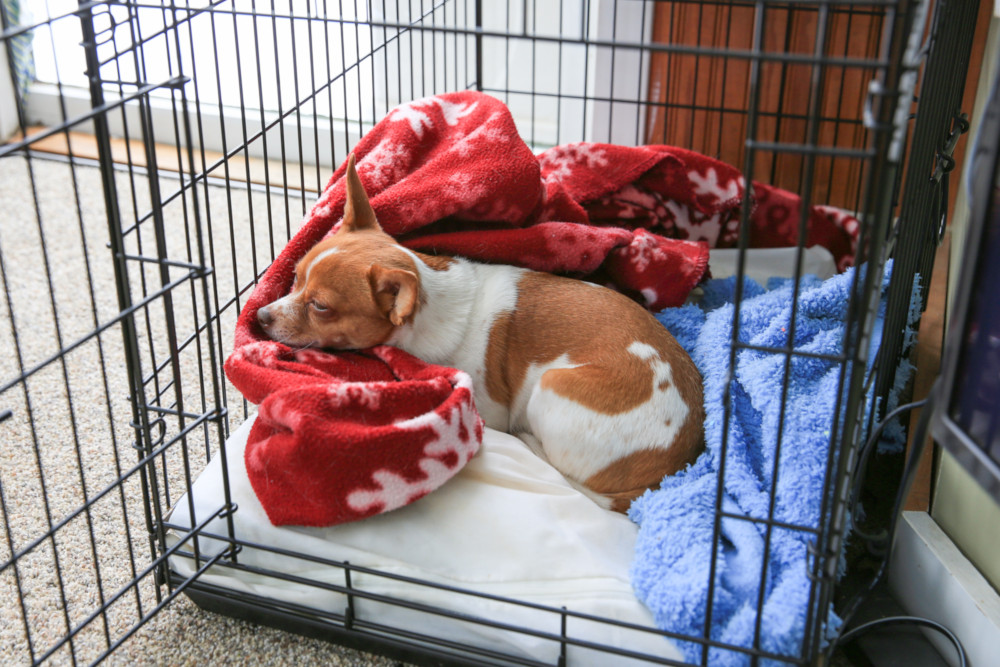
Whether you have a puppy or a full-grown lad, their mischievous energy is bound to lead them into trouble. Using a playpen will provide them with a safe place to play. The dog pen is a movable fence that is used to create a restricted area for your puppy to move around and play in. Once you see that things are getting out of hand, an extendable playpen will come in helpful. A dog playpen helps guarantee that your mischievous little friend is well-behaved. It is an excellent tool for confining them while enabling them to walk about and expend their energy. A dog playpen will give them a secure and novel environment, and they will be able to proudly display their playing area as if it were their own. A dog pen is just one of those essentials that every dog parent should own.
The dog can’t get out – If an external door is left open while you’re away, the dog won’t be able to go out without your knowledge, instead, they’ll be protected within their enclosure.
Your dog learns to be calm – When new people come over to visit, all dogs become excited, which leads to leaping and, if there are little children around, the risk of knocking them down and injuring them. This may be prevented by keeping the dog quiet with your pen when new people are there.
Your dog can sleep soundly – If you have little children, you’ll know that when they see an animal sleeping, they can’t leave it alone and must wake it up. This isn’t possible with a pen since the dog and the child are separated.
Safe potty training – You may notice that your puppy has one or two accidents when potty training. When you use a pen, though, these mishaps are all contained in one location rather than being dispersed over the house.
Things to Consider Upon Buying a Dog Pen:
The Pen’s Material
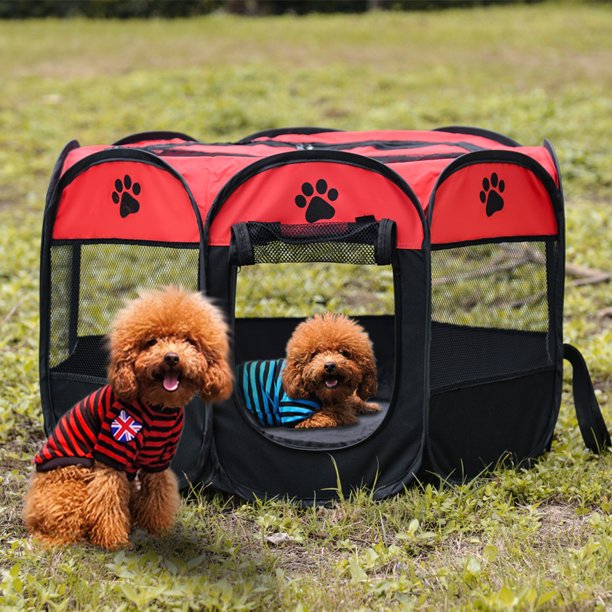
Metal pens are the most costly option, but you receive a greater level of quality and longevity for your money. Metal pens can’t be chewed (unless you still have that hyena) and are more difficult for your dog to pick up or push about. Metal pens with poorly made wire ends or sharp edges, on the other hand, might hurt your dog. within the cage’s joints Always inspect and check your pen before using it to make sure it’s safe. Metal pens have the extra benefit of being available in a variety of sizes, as well as the option to combine many pens to enhance their size. Metal pens are best utilized outside on concrete flooring, as they may scratch your surfaces if used within.
Plastic is a good compromise between affordability and durability, and it can be used both indoors and outdoors. Many people prefer plastic pens in the home because they are concerned about the scratches that a metal pen may leave on their flooring and the possibility that the metal will grow sharp and kill an animal. However, plastic is readily chewable, and your dog may gnaw their way out of the enclosure and into your favourite slippers. Plastic is not a good choice for puppies or tiny dogs who are teething or love chewing on objects. Plastic pens, on the other hand, are lightweight and portable. At the end of the day, you do want the best for your furry companion, so whether you choose a metal or a plastic pen you can’t go wrong with this wide assortment of dog pen options.
The Size
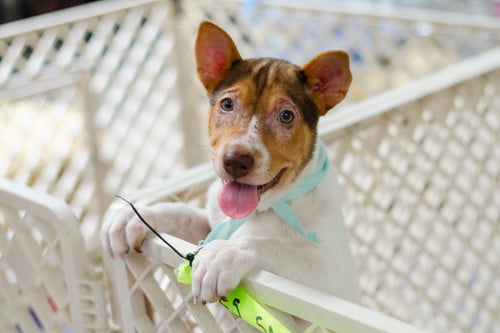
Some dog owners don’t understand that a pen or crate might be too large for their dog. They may want a smaller space to develop acquainted with the pen as they become accustomed to the surroundings. You don’t want to go too small for your dog’s needs, either. You don’t want to place a little puppy in a pen with wire bars that are too wide apart, since this might cause its head to become trapped. And the other way around, you don’t want to confine a big dog in a small enclosure where they may nibble their way out, swallow a zipper, or consume some mesh.
Choosing the proper size necessitates consulting a size chart tailored to your dog’s requirements. Inside their pen, your dog should be able to stand, lie down, and turn around. One of the primary purposes of indoor pens is that your dog will not want to soil in their living quarters and will wait to be allowed out. If your dog has a lot of room, it will only use one end for sleeping and sitting and the other for toileting. Observe your pet’s behaviour, check that they can’t scramble over the top or tip it over, it should be a strong, safe, and comfortable environment for them to hang out in.
Safety Considerations
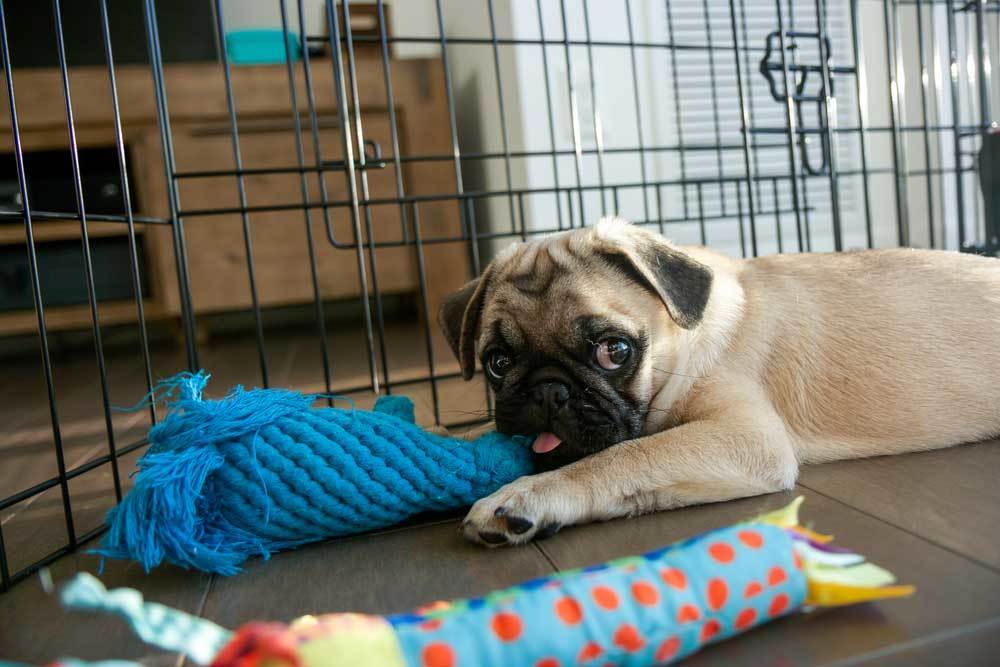
You should purchase a dog playpen for the same reason you would a toddler playpen: safety. Most dog owners have their pups’ best interests at heart, and those interests revolve around safety. Regardless of the restrictions of additional security measures, dogs should be able to feel comfortable in their pen. Dogs get into everything, including home chemicals, sharp items, electric outlets, and more, making common household risks for dogs aplenty. By putting your dog in a playpen, you may roam about the home knowing that your cherished pet is secure and sound.
Playpens, Crates or Even Both?
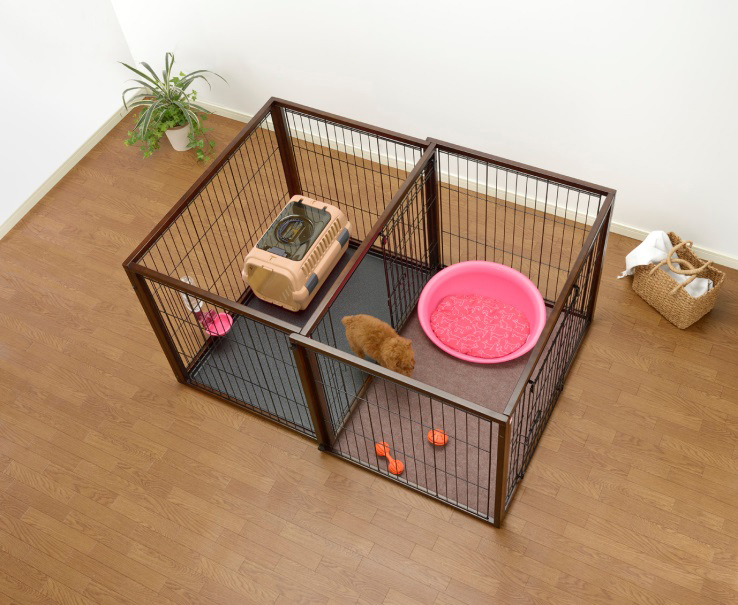
People frequently mix up the terms “playpen” and “crate,” but they are not the same thing. A playpen is a fenced-in area where your dog may run about. A crate, on the other hand, is a miniature dwelling within your home for your dog, where they can relax after a long day of play.
The pen allows you to provide lots of stimulation for your puppy. In an exercise pen, puppies may wander around, run, roll, and battle with their toys. Your dog may even exercise his balance and coordination abilities while in the pen if you add enrichment equipment like a wobble board. Playpens, although large enough to let your puppy wander about, are nevertheless tiny enough to prevent puppies from making a mess. If it’s possible, avoid using pee pads in the pen and instead take your puppy out on a regular schedule to go potty. That way, it’ll rapidly learn that peeing indoors isn’t a good idea.
Both crate training and pen training your puppy has their set of advantages. If you want your puppy to be secure throughout the day, a playpen will come in helpful. During the night, crates provide a compact and secure area. Furthermore, acclimating your young puppy to a box can prepare him for situations when he may need to stay in a crate later in life, such as at the veterinarian’s office, during a dog show, or on a vehicle journey.
Since your puppy will be exposed to a range of various kinds of containment at home most parents find that combining crate and pen training yields the greatest results. If you’re still unsure and want to reap the benefits of both crate and pen training, these dog pen and crate kits sold online are the perfect investment for you and your dog.