How to Pick a Bedside Table That Fits Your Style and Space
Nightstands are the perfect blend of function and style in your bedroom. They hold your nighttime essentials, provide a home for your favorite books, and can even set the tone for your space. The right bedside tables should balance practicality with personality, so you can enjoy both convenience and a cohesive look. I’ll walk through the key factors to consider when choosing a nightstand, while also sharing some stylish inspiration to spark ideas.
Durability
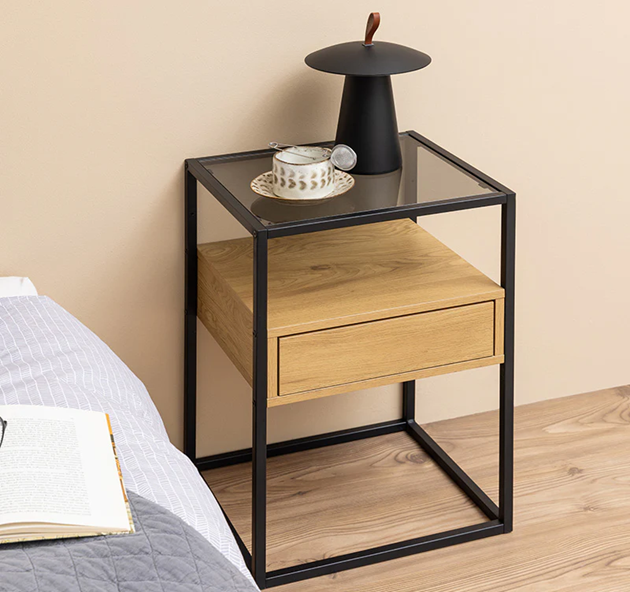
When shopping, furniture durability should be just as important as how it looks. Look for sturdy contemporary bedside tables made of quality materials, like solid timber, metal, glass, acrylic, and engineered options like MDF and veneer finishes. Each brings a unique feel to a bedroom, but they also differ in strength and longevity. Many modern designs combine engineered wood with metal legs or reinforced frames, striking a balance between stability and style.
Depending on the construction, some can comfortably support a surprising amount of weight on the top surface. Solid wood options, including pieces made with oak components, tend to be especially sturdy and built to last for years. On the other hand, lighter MDF or veneer styles are often chosen for their sleek appearance and suitability for everyday essentials rather than heavy loads.
Size
Another key thing to consider when choosing a modern bedside table is the size. Before you fall in love with a particular design, grab a tape measure and check the space beside your bed. You’ll want to consider both the footprint available and the height of your mattress, so the layout feels balanced and easy to use.
Generally, your bedside table should sit level with the top of your mattress or up to about 5–10 cm higher. That way, reaching for a glass of water or your phone doesn’t feel awkward. When it comes to width, a tiny table next to a large bed can look out of place, so aim for proportions that feel visually balanced. Here’s a simple width guide to keep in mind:
- Twin bed: approximately 43–51 cm wide (or wider if placed between two twin beds).
- Queen bed: around 51–66 cm wide.
- King bed: 61 cm wide or more.
Design
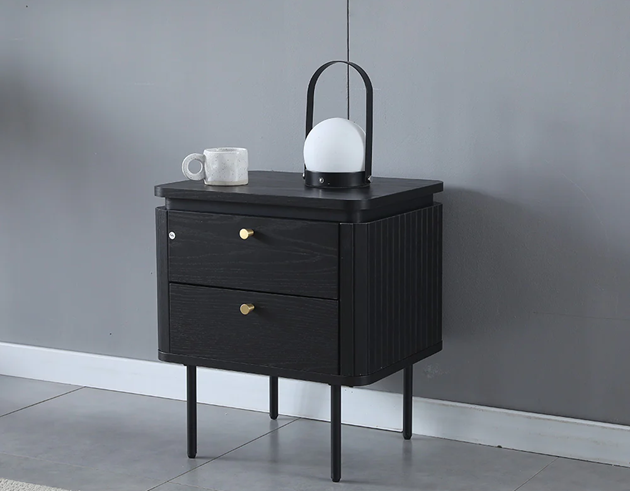
When choosing contemporary bedside tables, it’s important to think about how they fit into the overall look and feel of your bedroom. These pieces might be small, but they tie the space together. Instead of trying to find something that perfectly matches your bed or dresser, focus on finding a design that complements them. A well-designed room often feels layered and intentional, not like everything was bought as part of a matching set.
For example, if your bed is upholstered in fabric, add a nightstand in a warm, natural wood to create a beautiful contrast and bring in texture. On the other hand, if you already have a wooden bed frame, you can explore modern bedside tables in a painted finish or even with subtle metal accents to introduce variety while keeping the room cohesive. When different materials and finishes work together harmoniously, the bedroom feels more thoughtfully styled and visually interesting without feeling overdone.
Storage
Before you commit to a design, think about how you use the space beside your bed. Are you someone who stacks books, keeps a journal nearby, or charges multiple devices overnight? Or do you prefer a clear, minimal surface with everything tucked neatly away? Your habits should guide your choice.
If you tend to keep a few books within arm’s reach, a design with an open shelf underneath can help keep them organised without crowding the top. Maybe you like having a diffuser running at night or using a blue light-blocking device to help you sleep. Those need a stable surface and a bit of breathing room.
On the other hand, if visual clutter stresses you out, choose a design with drawers. It allows you to store chargers, hand creams, reading glasses, and other essentials out of sight but still close by. The right storage setup keeps your nighttime routine smooth and your bedroom feeling calm.
Symmetry
One of the questions that comes up all the time is – Should bedside tables be symmetrical? The short answer is “not necessarily”. That said, matching them creates a sense of symmetry that naturally feels calm and balanced, which is why they’re such a popular choice. If you’re aiming for a clean, cohesive look, a pair can instantly make the room feel pulled together.
But there are certain situations where mixing things up makes more sense. If your bedroom doubles as a workspace or guest room, for example, you might swap one nightstand for a compact desk to make better use of the space. In more eclectic interiors, two different pieces can add personality and visual interest.
If you go the mismatched route, just keep proportions in mind. Try to keep the heights fairly similar, especially if you’re placing lamps on top. If the tables vary quite a bit, wall-mounted sconces can help restore visual balance while keeping the lighting consistent on both sides.