Business Clothes for Men: Discover The Ultimate Guide to Office Style
The way you dress isn’t just about appearance. Your style speaks of your character, hygiene and dedication. Daily, you dress in casual clothing. You throw on a clean T-shirt and a pair of jeans, and you’re out the door. However, office spaces usually have a certain dress code you need to follow.
The clothes you wear to work vary significantly depending on which sector and position you’re working in. No one expects software engineers to dress the same as lawyers, just as no one expects a regular employee to dress the same as their boss.
Knowing how to navigate the business world attire can be tricky. From casual open-concept offices to high-end firms, everyone has different expectations and rules on how to dress. Use this guide to confidently update your clothes and build a wardrobe of business clothes for men that fit your office requirements and enhance your professional presence.
What Does the Term “Office Style” Mean?
Every office has a wardrobe requirement often referred to as “office style”. But what does that term really mean? Why do office clothes stand apart from our everyday wardrobe? The expression “office style” refers to a certain dress code a workplace might impose on its workers.
Whether it’s a requirement for tailored suits or just some light restrictions on clothing length and materials, the term is widely used in the corporate world. These restrictions on wardrobe are made to give the workplace a more uniform, put-together look. The more luxurious the company, the stricter the dress codes.
Office style has evolved significantly over the years. In the mid-20th century, men ruled the corporate world, which was heavily reflected by the way they dressed. Tailored designer suits, a monochrome tie, and some leather dress shoes were the standard for men’s corporate wear.
Today, the style of business clothes for men we see in office settings is more laid back and casual, hence coining the term “business casual”. Office spaces like promoting casual, comfortable environments, where everyone is friends rather than coworkers.
This was easily achieved by allowing workers to wear jeans, shirts, sneakers and sporty blazers during their office hours. Fashion continues to evolve, and the changing styles and times are always reflected in the way corporate workers dress in their workplaces.
What Should a Businessman Wear?
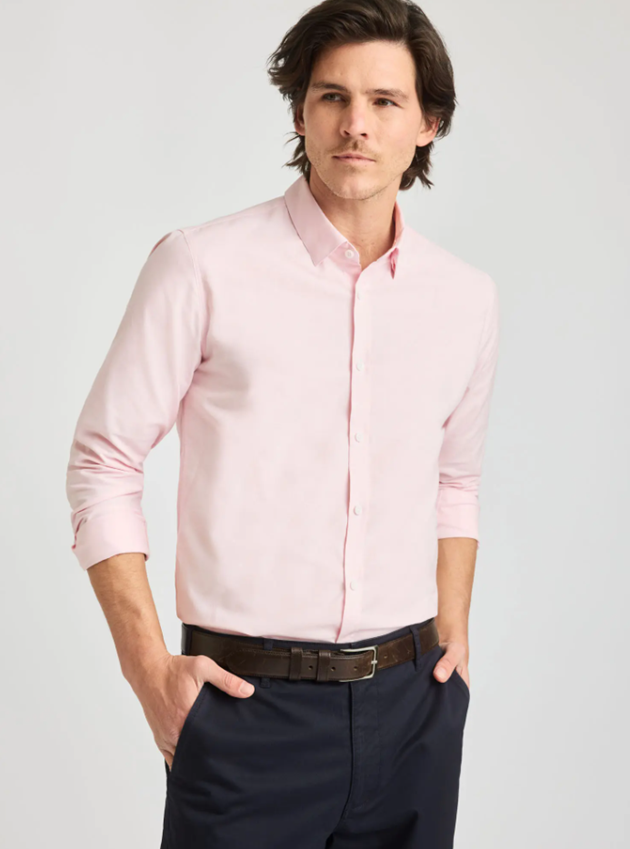
The first impression is always the most important one. Whether you’re sitting at a meeting or having a chat with a valued client, you need to look professional and presentable. Your clothes speak of your intentions and actions, and you definitely want to impress your coworkers. Some clothing items that true businessmen must have in their wardrobe are:
- Solid coloured suit
- Leather dress shoes
- A belt that matches their outfit
- Barrel cuffs
- Briefcase
- Solid coloured tie
Clothing items you should avoid if you want to appear professional:
- Denim jeans
- Casual Jackets
- Short-sleeved shirts
- Sneakers
- Backpack
Businessmen need to exude an aura that matches their strong reputation. You can achieve this by ensuring your clothes always fit perfectly. Your shirts shouldn’t hang loose along your torso, and your pants mustn’t fit too tightly around your thighs. Match the colours of your jacket to your pants and shoes, while your dress shirt is a couple of shades lighter.
Tailor your clothes professionally if needed. It also never hurts to accessorise. Add a nice watch that will bring your outfit together, but won’t draw too much attention away from your outfit. Even though you need to stick to a certain dress code, that doesn’t mean you can’t be yourself.
How To Build a Professional Office Wardrobe?
To save time before work and always be prepared when an important call comes your way, you should build a “capsule wardrobe”.
“Capsule wardrobe” is a phrase used to refer to a small collection of versatile and interchangeable items. Shirts, pants and shoes you can mix and match, and still end up with the perfect outfit each time. This form of business wardrobe is practical and will have you work-ready in no time.
Here is how you will build your ideal closet with some essential business clothes for men:
- Shirts: The item that usually stands out in a man’s office workwear is the shirt. Always have at least three shirts in your closet that are preferably light-coloured.
- Coats: For an overcoat, you have multiple options depending on the weather or occasion. In your capsule wardrobe, it’s recommended you have a suit jacket, a stylish winter coat, a casual jacket and a more formal suit option.
- Ties: You can never have too many ties. They don’t take up too much space and add a dash of spice to your outfit. Keep it simple with darker ties, or add a pop of colour to your outfit with a pattern tie.
- Sweaters: Keep two sweaters in the back of your closet for the colder months.
- Footwear: When it comes to footwear, you can never go wrong with black. A pair of loafers, some sneakers and boots for winter is enough to get you started.
- Pants: You don’t really need more than two pairs of suit pants. Go for a lighter one and a darker one, that way you can add a dash of variety to your outfits.
Summer vs. Winter Business Clothes: What’s the Difference?
Men’s fashion doesn’t vary that much, even with extreme weather changes. The staples stay the same. Shirts, suits, dress pants and a pair of loafers will always be the staples.
When the warmer months roll along, prioritise more lightweight, breathable fabrics. Don’t add unnecessary layers as this can lead to sweating and even overheating. Still, even though it’s hot out, avoid wearing casual items, such as shorts and sandals, to work.
In winter, layer as much as you’d like. Sweaters over shirts, stylish coats and even a pair of professional boots all look stylish. Stay warm during your commute to the office.
Conclusion
In conclusion, business clothes don’t have to be boring. You can experiment with styles, patterns and even colours. However, don’t push the limits of your dress code too much, as you can get in trouble. Build a simple wardrobe and match from there. This way, you impress both your boss and your clients with your impeccable sense of style.