Knitting 101: Discover the Whats and Hows of Yarns
Let’s start by answering the question: What is yarn? Sheep’s wool, mohair, and angora are some examples of the types of fibres used to make yarn. Other typical fibres include cotton, hemp, and silk (polyester, nylon, rayon). These interwoven fibres, known as plies, are spun into thicker strands. The fabric, stitch definition, and general feel of the yarns are all determined by the number of plies (for instance, a single-ply yarn or a two-ply yarn).
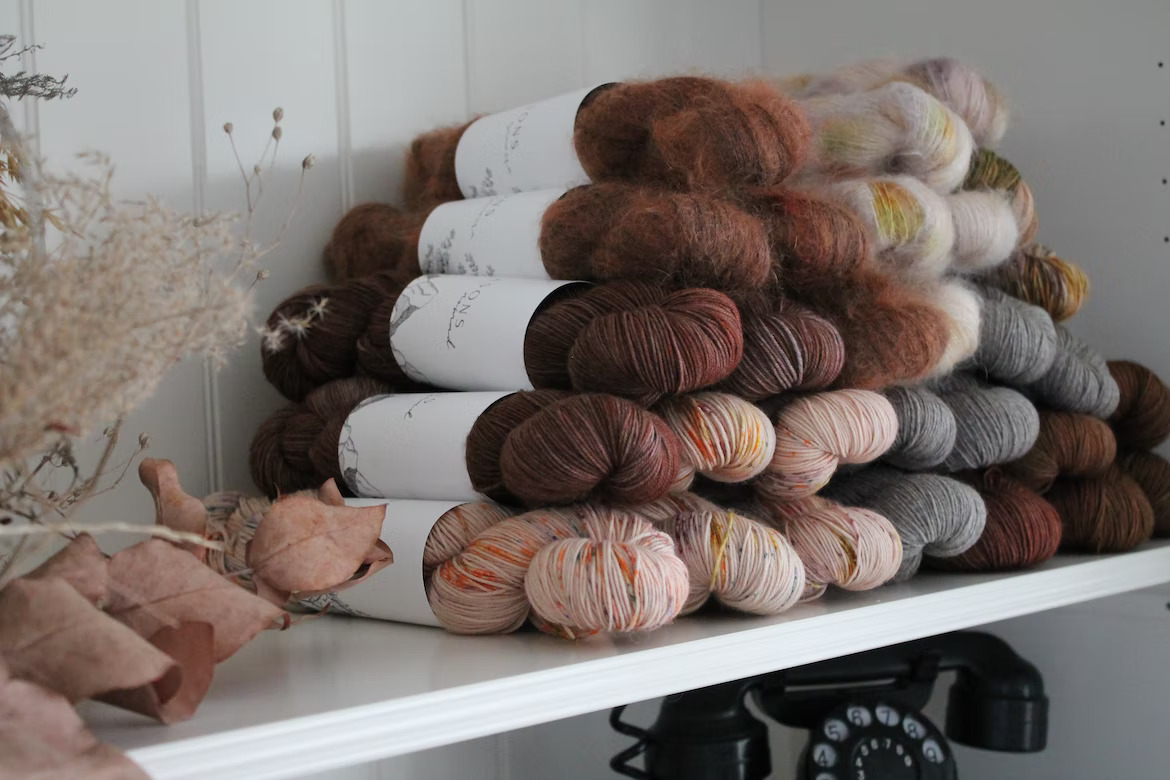
Common Knitting Fibres for Beginners
Wool
Wool, one of the most popular and quality knitting yarns spun from sheep’s fleece, is reasonably priced and simple to work with. It functions well for knitwear clothing in the summer for its breathability and moisture-wicking properties, as well as in the winter for its resilience and moisture resistance. To increase durability, it is frequently combined with other fibres in a blend. Wool may be dyed in a variety of colours because it is naturally a creamy white tint. Unfortunately, with time, wool is prone to pilling.
Mohair
Despite being one of the warmest animal fibres, its fluffy, luscious fibre is renowned for its gentle shine and lightness. It, however, costs more than wool does. The best feature of this fibre is its resistance to wrinkling and sagging because of its extremely elastic stretching and springing back-to-shape properties. It can be challenging to knit with because of how airy it is, especially if you want distinct stitches. To provide weight, this type of knitting yarn is frequently combined with silk or wool. Despite having a low risk of allergies, it can nonetheless irritate the skin and cause itching.
Cotton
One of the most popular natural plant fibres is this one. It is reasonably priced and is ideal for showcasing complex stitchwork because of the smooth nature of cotton. Although it has an excellent drape, it is inelastic and prone to splitting while you are knitting, so you definitely need more experience before getting into it.
Cashmere
This yarn is a truly premium product because of its exceptional quality. With use, softness really becomes better. It is ideal for winter cardigans and neck scarves due to its great insulating material. Not to mention, it has a gorgeous texture that resembles a delicate cloud. Usually, different fibres are combined with it to lower the price. Although you can accommodate this by stitching freely, it does not breathe as well as other natural textiles and is prone to pilling.
Angora
This comes from the fur of the angora rabbit. One of the finest animal fibres, it is light, silky-soft, and incredibly warm (it is even seven times warmer than sheep’s wool). A true luxury knitting yarn, as it is one of the most expensive. Akin to mohair, angora isn’t great for knitting ornate stitches and tends to be slippery, so choose a textured set of needles for grip. It does not resist stains well although it does resist retaining odours. That’s why you will commonly find it blended with an acrylic fibre to counter its elasticity.
Alpaca
This dense fibre, which is hypoallergenic and spun from alpaca fleece, is a suitable choice for people with sensitive skin and is best used for baby knits. Because of its propensity to over-drape, this fibre is combined with other natural fibres to increase the tension.
Silk
This fibre is undoubtedly smooth and shiny, or “silky”. Due to its higher cost, this is most readily available in fine plies. It works well for knitting lace, but it can capture and cling to static electricity. It’s advised to pick a type with a higher ply that is firmly spun to combat this. Silk is frequently mixed with other fibres to give them a plush softness, like the knitting yarns blends with mohair.
Rayon
This is the earliest synthetic fibre that can still mimic the characteristics of natural fibres; it has a beautiful drape and is lustrous, silky smooth, and saturated in colour. It is the ideal yarn for summer knitwear since it is cool, cosy, and transfers body heat. On the other hand, it has poor flexibility, poor heat retention, and poor long-term ageing. Textured novelty yarns like boucle or ribbon are common variations.
Nylon
This synthetic material was created initially as a silk substitute. It feels cool to the touch, is smooth and shiny, and is similar to rayon in terms of cleaning. It is quite resistant to wear and tear, though.
Polyester
Easy-care yarns are produced by blending polyester with natural fibres. This type of yarn offers excellent draping, wicking, and breathability characteristics, making it suitable for use throughout the year. The stitch definition is poor, and it can feel rough against the skin.
Understanding the Label
Every piece of yarn has a label that includes all the information you require, such as the fibre content, weight, quantity, care recommendations, recommended needle size, gauge, and dye-lot number. With this in mind, read up and select the yarn that is most appropriate for your project. Oftentimes, the recommended yarn weight and needle size can be found in the instructions.
But if you’re knitting something you designed yourself, pause to think about whether you want it to be machine washable. Is it designed to keep you cool in the summer or toasty in the winter? What are the item’s dimensions and shape? Winter mittens made of robust merino wool will be well-crafted, and a loopy rosette scarf made of opulent material like mohair will be luxuriously soft. It’s entirely up to you to get creative and make your first knit piece.